When you search for a modern rental property in Germany, you will increasingly encounter the term “KfW-40.” For many prospective tenants — especially those relocating from abroad — the label sounds like bureaucratic jargon. It isn’t. The KfW-40 efficiency standard is one of the most meaningful numbers you can see on a German property listing, because it has a direct and measurable impact on your monthly outgoings. This guide explains exactly what it means, what technology powers it, and why it matters so much for anyone planning to rent a terraced house in Germany today.
What Is the KfW-40 Standard?
KfW stands for Kreditanstalt für Wiederaufbau — Germany’s state-owned development bank, which has been financing energy-efficient construction for decades. The “KfW-40” label (formally: Effizienzhaus 40) indicates that a building consumes no more than 40% of the primary energy demand that an equivalent reference building would require under Germany’s Building Energy Act (GEG).
In plain terms: a KfW-40 home uses less than half the energy of a standard new-build. Everything from the wall insulation to the ventilation system to the heating source has been designed and verified to meet this threshold — independently certified before the building is handed over.
The Technology Behind a KfW-40 Terraced House
Reaching the 40% energy target requires a coordinated set of building technologies. Here is what you will typically find in a certified KfW-40 new-build:
Air-Source Heat Pump
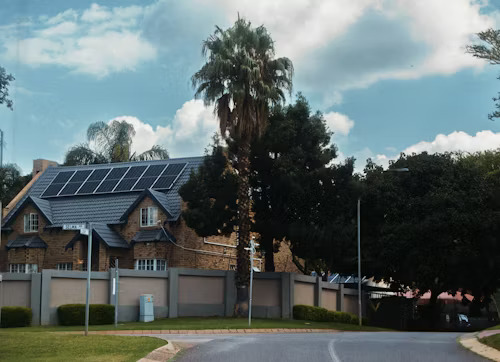
Instead of a gas boiler, KfW-40 homes use a heat pump that extracts thermal energy from outside air and converts it into heating and hot water. When paired with photovoltaic panels on the roof, much of the electricity the pump needs is generated on-site. The result: heating costs that are both lower and far less vulnerable to gas price spikes.
Triple-Glazed Windows and External Insulation
Three-pane glazing with low-emissivity coatings, combined with a high-performance external wall insulation composite system (WDVS), eliminates the cold spots and thermal bridges that make older German buildings expensive to heat. Summer comfort improves too: the same insulation that keeps winter heat in also keeps summer heat out.
Mechanical Ventilation with Heat Recovery (MVHR)
A controlled mechanical ventilation system continuously circulates fresh air through the home while recovering up to 85–90% of the heat from outgoing stale air. This means you breathe clean, fresh air all year round without the heat loss of opening windows in winter — and with a dramatically reduced risk of mould from condensation.
Rooftop Photovoltaic System
Most KfW-40 developments include large-scale solar panel arrays. In community housing schemes, the electricity generated is distributed proportionally across the homes. Tenants benefit from below-market electricity prices for a share of their usage — reducing the overall cost of running a heat pump to a minimum.
How Much Do Tenants Actually Save?
The savings are real and substantial. The German Federal Environment Agency (Umweltbundesamt) estimates that tenants in highly efficient new-builds spend 60–70% less on heating compared with typical existing-stock properties in energy class D or E.
To put that in concrete figures: a 120 m² house in an older building might carry an energy consumption of 150–200 kWh/(m²·a). At current electricity and gas prices, that translates to annual heating costs of €2,000–2,800. The same property built to KfW-40 standard, heated by a heat pump and supported by photovoltaics, can bring that figure down to €400–700 per year — a saving of over €1,500 annually, or more than €125 every month.
A Real-World Example: Riverside Herbrechtingen
One of the most accessible examples of KfW-40 terraced houses currently available to rent in Baden-Württemberg is the Riverside Wohnpark in Herbrechtingen, situated 40 kilometres from Ulm and 8 kilometres from Heidenheim an der Brenz.
The development comprises 48 terraced houses of 120 m², each designed to KfW-40 standard, with:
- Air-to-water heat pump and community-scale heating plant
- Rooftop photovoltaic installation across the entire development
- Triple-glazed windows and a full thermal envelope
- MVHR ventilation system (Komfort Plus)
- Glasfibre broadband connection
- Two parking spaces per home with EV charging pre-installation
- Fitted kitchen with German-brand appliances included in the rent
Net cold rents start at €1,635/month — competitive for a new-build house of this specification anywhere in the greater Ulm region. Monthly total costs (including utilities advance payment and parking) are around €1,995.
Who Benefits Most from Renting a KfW-40 Property?
- Families with children who want a garden, space, and stable running costs
- Commuters working in Ulm, Heidenheim or Aalen who prefer to live outside the city
- Electric vehicle owners who can charge from the development’s solar electricity
- Tenants upgrading from an older flat with high heating bills — the savings often offset a higher nominal rent
- Environmentally conscious households who want to reduce their residential carbon footprint without buying a property
The Bottom Line
The KfW-40 label is not marketing. It is a certified, independently verified technical standard that puts real money back in your pocket every month. For anyone currently paying €150–200 per month in heating bills in an older German rental property, a move to a certified KfW-40 home can pay for itself in reduced running costs — while also delivering a noticeably better living environment: quieter, warmer in winter, cooler in summer, and filled with fresh air year-round.
If you are looking for a KfW-40 terraced house to rent in Baden-Württemberg, current availability and full specifications for the Riverside Wohnpark in Herbrechtingen are listed at: www.riverside-herbrechtingen.de